


What You Need Before You Start Mixing Concrete
Gather your materials before touching a bag. Missing one component mid-mix wastes material and produces uneven results.
You will need Portland cement, sand, coarse aggregate (gravel), clean water, and a mixing container or drum. Check that your tools are clean. Residue from old batches changes the chemistry of your new mix.

Understanding the Concrete Mix Ratio
The mix ratio controls the strength and workability of your concrete.
Standard Mix for General Use
A 1:2:3 ratio of cement, sand, and gravel works for most residential projects. This means one part cement, two parts sand, and three parts gravel by volume.
Mix Ratio for Structural Work
For load-bearing slabs or foundations, use a 1:1.5:3 ratio. The higher cement content increases compressive strength, which is essential when the concrete must carry significant weight.
Mix Ratio for Finishing and Repair
For surface repairs, patching, and thin overlays, a 1:2:2 mix gives better workability. The finer aggregate and increased cement make it easier to spread and finish smoothly.
How to Mix Concrete by Hand

Hand-mixing works well for small volumes up to about two cubic feet.
Start by combining the dry materials in your mixing trough. Add the cement first, then the sand, then the aggregate. Blend the dry components thoroughly before adding any water.
Create a crater in the center of the dry mix and pour in roughly half of your water. Fold the dry mix inward from the edges, not outward, to avoid water running off.
Continue adding water in small amounts until the mix holds its shape when squeezed but does not crumble. The correct consistency looks like thick oatmeal.
How to mix concrete by hand is a skill that improves with practice, but the ratio and dry-blend-first method never changes.
How to Use a Concrete Mixer
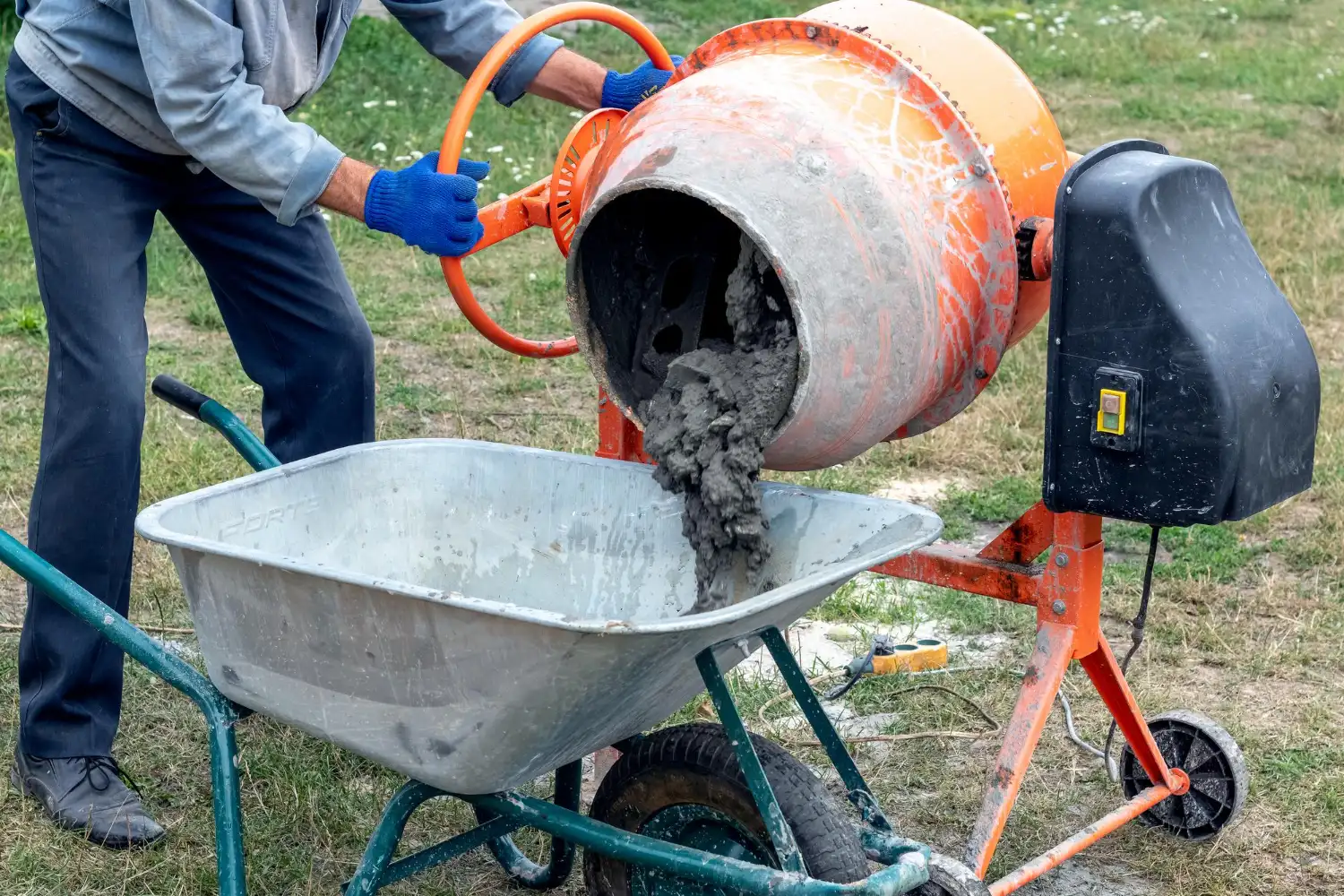
For volumes above two cubic feet, a drum mixer saves time and produces a more uniform mix.
Load Order Matters
Add half the water first, then the aggregate, then the cement, then the sand. This load order prevents the cement from balling up against the drum.
Mix Time
Run the drum for at least three to five minutes after all materials are loaded. Under-mixed concrete has dry pockets that reduce strength unpredictably.
Checking Consistency
Stop the drum and run a quick slump test: pile the mix on a flat surface and let it settle. A well-mixed batch holds a slight dome without slumping flat or cracking at the base.
Common Mistakes When Mixing Concrete
Even experienced builders make avoidable errors. Here is what to watch for.
Adding Too Much Water
More water makes the mix easier to pour but significantly reduces the final strength. A water-to-cement ratio above 0.6 by weight weakens the finished slab.
Skipping the Dry Blend
Adding water before the dry materials are fully combined creates uneven pockets of cement and aggregate. Always dry-blend first, every time.
Using Dirty Water
Organic material, oil, or salt in the water interferes with the cement hydration process. Use potable water only. If your tap water is drinkable, it works for concrete.
Under-Mixing
Visible dry streaks in the mix mean it is not ready. Continue mixing until the color and texture are completely uniform throughout the batch.
Rushing the Cure
Concrete does not dry. It cures through a chemical reaction that needs moisture and time. Keep the surface damp for at least seven days after placement to reach design strength.
How to Mix Concrete for Specific Applications
Different applications call for slightly different approaches to how you mix concrete.
Driveways and Slabs
Use a 1:2:3 mix with a low water ratio for a hard, durable surface. Aim for a slump of three to four inches for good workability without sacrificing strength.
Fence Post Setting
A dry-pack method works best here. Pour dry concrete mix around the post and add water on top. Gravity pulls water through the mix, filling the void without creating air pockets.
Anchoring Hardware
For anchor bolts and embedded hardware, use a non-shrink grout mix or a 1:2 cement-sand blend. Shrinkage cracks around embedded items allow water intrusion, which accelerates corrosion.
Stairways and Steps
Steps take repeated impact loading. Use a 1:1.5:3 structural mix. Reinforce with rebar or wire mesh at the nosing of each step where chipping is most likely.
Countertops and Decorative Surfaces
Decorative concrete uses a finer aggregate and higher cement content, typically 1:1.5:2. Add fiber reinforcement to reduce hairline cracking in thinner pours.
Start Your Next Project With Confidence
You now have a clear, practical understanding of how to mix concrete for any application. Get the ratio right, blend dry materials first, control your water, and give the cure the time it needs. Follow these steps and your concrete will perform exactly as it should.